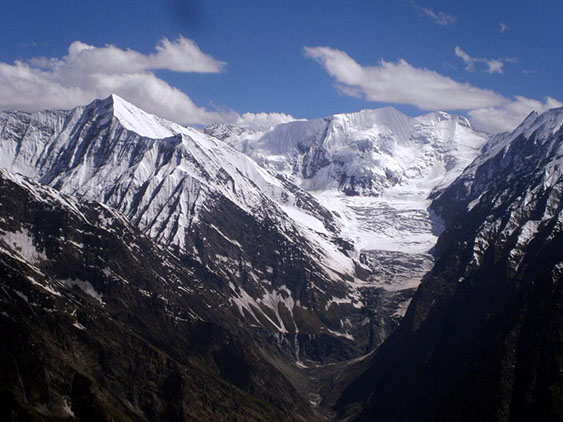
Pushkar – raising up to the clouds, the people who belong to the military caste and have their own fort, adventures with the magic bus

OLYMPUS DIGITAL CAMERA

The ghats at Brahma Lake

10-11.10.

Pushkar – raising up to the clouds

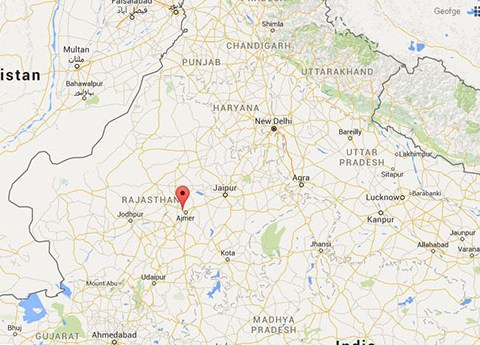
Pushkar Pushkar is a small town in the semi-deserted central region of Rajasthan. The soil is sandy and there is not much vegetation. Small streets and buildings with ancient architecture surround Brahma Lake. Taking pictures, eating meat and walking with shoes around the sacred lake is strictly forbidden. There are artificial pools with ghats (stairs leading to the water). Dipping in the water is believed to be a blessing – to some it gives beauty, to others fertility and to some healing. Continue reading

Equipment – the latest high-tech fashion trends in high-mountain tourism

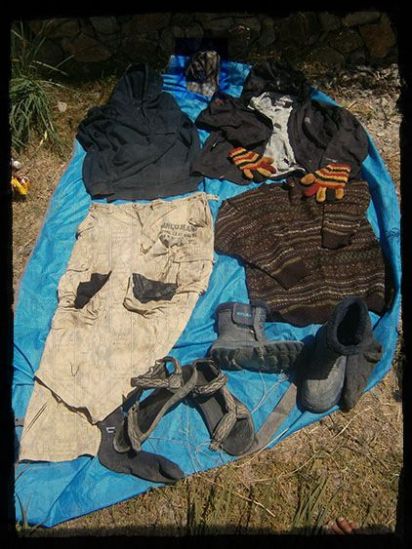
This is the equipment of MagicKervan during our two-month treks in Ladakh region in the Himalayas. With it (and before we bought some things even without it) we passed 700 km. on foot in the Himalayas.


Please don’t try this at home! (Моля, не опитвайте това вкъщи!)


Mr. Shushtari:
OLYMPUS DIGITAL CAMERA


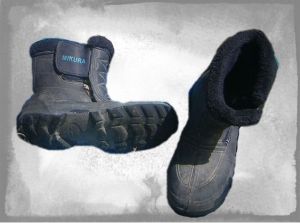
A_Boots_Mikura_Boots_CUTRUBBER BOOTS FROM THE FAMOUS MIKURA BRAND – ICE WALKER (better than Prada, North Face, Adidas and the like)OLYMPUS DIGITAL CAMERA

  • Specially designed sole that sticks on ice, snow and wet stones
  • 100 % waterproof
  • Breathing lining made of high quality plush that gives you comfort and perfect thermal insulation
  • Perfect for high and very high-mountain treks

Price: 6 USD

Origin: Keylong, Lahaul, India


A_Sandals_CUTCHINESE SANDALS TOREAD

  • Where the expensive tourist shoes can’t pass, TOREAD fly with ease and grace!
  • Protection of the toes against kicking pebbles
  • Unique system against falling asleep by inserting pebbles between the sole and the foot
  • A sole that auto-sticks to wet and slippery services
  • With them you walk easily on snow and ice

Price: 15 USD

Origin: The Chinese E-Bay


A_Pants Cve_CUTSPORT PANTS

  • Modern design and high quality material that absorbs all kind of dirt easily
  • Wind and rain permeable
  • Multi-functional pockets that can contain all kinds of small things

Price: 0 USD, second hand, received as a gift

Origin: A friend
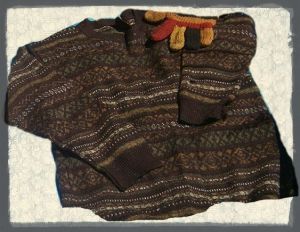


A_Sweater_CUTWOOL SWEATER THIRD HAND

  • Perfect thermal insulation
  • Built in holes for ventilation
  • Unique design

Price: 1 USD (second hand shop)

Origin: Keylong, Lahaul, India


A_Switcher_CUTSWEATSHIRT EMO

  • Thick cotton material that provides perfect thermal insulation
  • Universal size – could be worn by small as well as big people
  • Multi-functional – it serves as a sitting mat or pillow
  • Dust absorbing

Price: 1.5 USD

Origin: Keylong, Lahaul, India
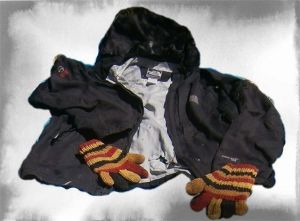


A_Jacket_Cve_CUTFAKE SPORT JACKET NORTH FACE

  • Next generation GORETEX – GOLDTEXOLYMPUS DIGITAL CAMERA
  • Water, wind and cold permeable
  • Helps you become moldy in warm weather
  • Grunge model design with worn out material
  • Antique emblem of the Bulgarian Tourist Union

Price: 0 USD (second hand gift)

Origin: Atila (Magy’s brother)


Accessories:

A_Cp_Cve_CUT CAP NEW YORK

  • Local design
  • Special long eye shade that protects the face and the eyes from UV rays during high mountain treks
  • With this hat you absolutely don’t need any sunglasses or sun protection cream

Price: 1 USD

Origin: Keylong, Lahaul, India


A_Gloves_Cve_CUTGLOVES

  • Hand knitted
  • Unique design with incredible colors
  • Inside liner except of the fingers in order to ensure ventilation and freezing in low temperatures

Price: 1.5 USD

Origin: Leh, Ladakh, India


———————————————————————————————————————-

Magy

OLYMPUS DIGITAL CAMERA


OLYMPUS DIGITAL CAMERA

LEATHER SNEAKERS ADIDAS

  • Unique design with special openings for airing of the toes
  • Specially aged (10 years process) leather that gives the camouflage color and the worn out effect
  • Innovative sole – absolutely smooth sole that accelerates your movement considerably via sliding
  • Recommended for high-mountain treks including passing of glaciers and deep snow

Price: 0 USD (gift, tenth hand)

Origin: Tusi (friend of MagicKervan), Bulgaria


A_Sandali_Kecove_Magy_CUTTOREAD SANDALS

  • Design – 100% imitation of the brand Teva
  • Sole in relief that protects against sliding of the foot
  • Comfortable for all kind of terrains
  • Perfect for crossing deep and fast Himalayan rivers

Price: 14 USD

Origin: The Chinese E-Bay
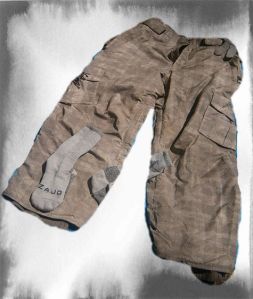


A_Pants Magy_CUTSNOWBOARD PANTS

  • Incredible design, cut and colors
  • Provides thermal protection, water-proof and excessive warmth in hot weather
  • Many pockets with all kinds of functions including airing of the body

Price: 2 USD (second hand)

Origin: Leh, Ladakh, India
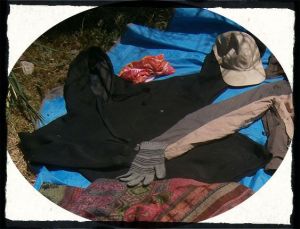


A_Switcher_Magy_CUTSWEATSHIRT SOUTH POLE

  • High thermal protection factor
  • Comfortable kangaroo-like pockets
  • Multi-functional – could be used as pajamas if sleeping 4000 m. (13000 feet) above sea level or higher

Price: 2 USD (second hand)

Origin: Leh, Ladakh, India
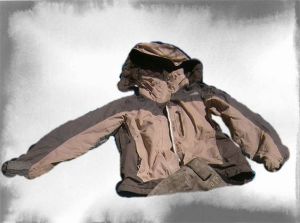


A_Jacket_Magy_CUTJACKET NORTH FACE LIFE SAFER

  • Rain permeable
  • Special design with increased weigh that exercises and strengthens the muscles on the back and the shoulders
  • Multi-functional – could be used as a pajamas in very low temperatures
  • Recommended for high-mountain treks in the Himalayas

Price: 5 USD (second hand)

Origin: Second hand shop Sofia, Bulgaria


Accessories


A_Cap_Magy_CUTBASEBALL CAP

  • Unique local design
  • Special color that is hard to identify
  • Total sun protection

Price: 1 USD

Origin: Leh, Ladakh, India
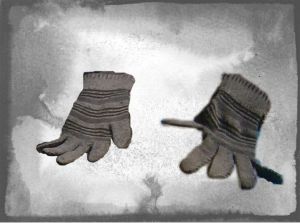


A_Gloves_Magy_CUTGLOVES

  • Machine knitted
  • Unique function 3 in 1:
  • Do not keep warm
  • Do not protect against wind
  • Accelerated rate of water absorption

Price: 1 USD

Origin: Central bazaar Sofia, Bulgaria


A_Shawl_Magy_CUTSHAWL

  • Special polyester material that makes you sweat excessively in warm and hot weather
  • Special choking function if used as mask in high mountain treks with thin air
  • Design – bright colors that can save your life if you get lost in the mountain and need to be found

Price: 1 USD

Origin: Leh, Ladakh, India


A_Chorapi_Magy_CUTSOCKS “ZAJO”

  • Thermal insulation
  • Very comfortable
  • Priceless – they cost as much as all our other equipment

Price: 16 USD

Origin: Sport shop, Bulgaria


Equipment we share


OLYMPUS DIGITAL CAMERA

TENT “HIMALAYA”

  • World (not)known Chinese brand
  • Spacious
  • Water and wind proof
  • Accelerated aging of the materials – this helps raising the intelligence of the trekker and quickens his/her wits in finding ways to repair it in extreme conditions
  • Falling apart sticks that develop skills when one needs to repair them

Price: 60 USD

Origin: The Chinese E-Bay
 

A_Shalteta_CUT


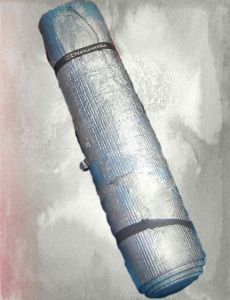
SLEEPING MATS 6 mm.

  • Special polyester rapidly shrinking material
  • Gets thin very fast and reaches the comfortable 2 mm. thickness in no time
  • Cold permeable which makes you turn many times in your sleep and like this protects you from the White death
  • Gives an incredible sense of closeness to Mother Earth
  • Self-unsticking thermal foil

Price: 5 USD

Origin: Yantai, China


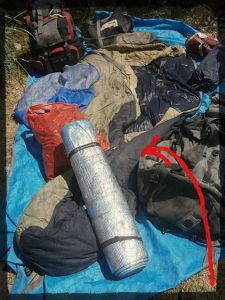
SLEEPING BAGS:
 

OLYMPUS DIGITAL CAMERA


WINTER “QUECHUA” THE LIFE SAVER

  • Perfect thermal insulation
  • Self-tearing indisdes
  • Long life

Price: 60 USD

Origin: Tenerife, Spain


OLYMPUS DIGITAL CAMERA


CHINESE SUMMER SLEEPING BAG

  • Special size for dwarfs
  • Very light and small size
    • Very thin – gives you incredible sense of cold during treks
    • Self-opening zipper

Price: 0 USD  (gift, tenth hand)

Origin: A friend

 

A_Phone_CUTPHONE “LG”

  • Antique model from the past with a lid
  • Mirror on the lid
  • Alarm clock
  • Special function “anti-molesting” by quick self-discharge of the battery
  • Anti-robbery function – it is so old that even the most despicable thief wouldn’t take it

Price: 0 USD (gift second hand)

Origin: Relatives


RUCKSACKS

 A_Ranica_Cve_CUT“TASHEV” 85+15

  • Comfortable and long lasting
  • Very big capacity – it can hold so many things and become so heavy that it is impossible to carry
  • When loaded to the max it keeps moving by itself through beautiful mountain sceneries
  • Antique value – this model has been stopped from production 10 years ago

Price: 40USD

Origin: Varna, Bulgaria


A_Ranica_Magy_CUTRUCKSACK “ЕУЕ”

  • World (not)known Korean brand
  • Limited production – it could be found only at the Central Bazaar in Sofia, Bulgaria
  • Long lasting and very durable
  • Bonus features – hurts your back and shoulders
  • Special function – feels two times heavier that the luggage it contains

Price: 12 USD

Origin: Central Bazaar in Sofia, Bulgaria
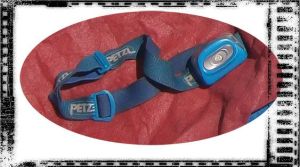


A_Chelnik_CUTLANTERN “PETZL”

  • High quality
  • Economic – long battery life
  • Priceless – it costs almost as much as all the other equipment (except the socks!)

Price: 30 USD

Origin: The Chinese E-Bay


A_Map and compass_CUTCOMPASS AND MAP

  • Generate magic experiences and interesting coincidences
  • Very helpful in uninhabited areas
  • Economical – frees you from the need to buy expensive GPS or participate in paid tours with local guides

Price: 10 USD

Origin: Leh, Ladakh, India


Cooking utensils:


A_Kerosene_Stove_CUTKEROSENE STOVE

  • Innovative model – copy of a local original model
  • Works with diesel fuel too
  • Perfected after several explosions
  • Special light construction
  • Could be disassembled easily
  • Helps develop the user’s creativity – every time you need to cook you have to find special stones to stabilize its position

Price: 10 USD

Origin: Keylong, Lahaul, India


A_Tendjera_CUTA POT WITH A LID

  • Fast cooking
  • Special functions – protects fruits from smashing when carried in the rucksack
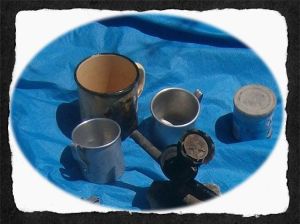


A_Kancheta_CUTCANAKINS

  • Aluminum material that absorbs heat rapidly and helps burning your lips and fingers
  • Light and multifunctional


A_Noj i pribori_CUTSMALL COOKING KNIFE

  • Cuts perfectly all kinds of stuff
  • Multi-functional – helps you protect yourself against man-eating tigers and leopards


Spoons and stickslight and easy to use


Mr. Shushtari’s life saving advises 

  • Don’t go in the mountain without adequate equipment. This may cost you your life.
  • Better to die in the mountain than in front of the TV with a remote control in one hand and a smartphone in the other.
  • The good equipment will help you climb many peaks in the Himalayas and sleep under the sky

Totally naked with a broom made of peacock feathers (a short article about the religion of extreme pacifism – Jainism)

Jainism_1

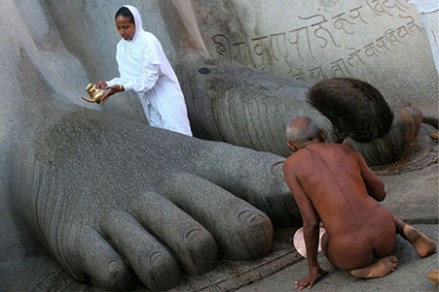
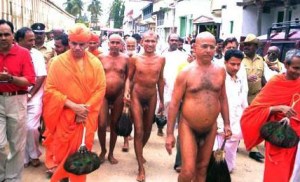
Bald head, wide smile, with every inch of his body exposed, without even a piece of cloth to cover it, with a nice belly, broom and a utensil for water made of coconut shell in his hands. If you see a person like this on the streets you will probably think: he has a severe mental illness, or maybe I am going crazy, or there is some secret I can’t grasp?

Who is this person? Few have heard about the people who practice extreme asceticism – the followers of the sect Digambara (literally “dressed with the wind”) – a major branch of the Indian religion Jainism.From Web

But there is a reason for us to get acquainted with their philosophy and many things to learn from the teachings of Mahavira – the founder of Jainism. This is a very ancient religion that started B.C. and it is even older than Buddhism. Nowadays it still has many followers across India. Jainism has two main sects – Svetambara and Digambara. The believers keep in high honor 24 saints and teachers called Tirthankara. The 24-th is the saint Mahavira.

It could be said that this is one of the first thinkers on the planet who elevated the ideal for non-violence and pacifism to a religion. Mahavira follows the motto “live and let live” and postulates that one must not cause harm to any living being (even the smallest of animals and insects) – not with words, nor with thoughts and actions – this is called the ahimsa principle.

OLYMPUS DIGITAL CAMERA

Mahavira preached that as men and women do, all sentient beings too feel pain and are afraid of death. According to his teaching if we don’t want to suffer then we shouldn’t make anyone or anything suffer. Jainism practitioners follow this principle to the extreme – they always clean the road in front of them with a broom in order to not step on an ant or any other insect.

The followers of this religion are vegetarians and in addition they don’t eat root crops such as potatoes, turnips, carrots etc. that need to be “killed” in order to be eaten. Pacifists par excellence they live in peace with all Earth’s inhabitants. Here are some of the flabbergasting vows that the Jainism ascetics, who renounced the material world, take:

  • Not to have any material possessions. This includes everything from house to clothes and money
  • Not to use blankets and mattresses and to always sleep on the ground without any insulation
  • Not to protect oneself from the cold and the heat – to avoid warming oneself on fire in the winter and to not cool with water in the summer
  • Never to use any transportation vehicles, be always bare footed and walk on foot and always to move and change places
  • To eat and drink once a day using only one’s hands – utensils, forks and spoons are not allowed. The follower must always eat in standing position
  • To practice absolute celibacy, honesty and nonviolence
  • To remove one’s hair and beard once every two to four months by plucking by hand one’s hairs; usage of scissors and razor blades is forbidden

The only two things a Jainism practitioner can carry on oneself while he/she roams the world is a broom made of peacock feathers, with which to clean the path in front of him/her in order to not step on an insect, and a water utensil made of coconut shell.

There is a saying that taking this vows is like walking on the edge of a sword.

In order to enrich our consciousness and truly understand something it is not enough to just read the letters in front of our eyes. If you want to feel how amazing this kind of life could be just close your eyes for a moment and imagine you are that person. See yourself walking totally naked in a forest with a broom in one hand. A life where you don’t own anything, but maybe have it all?

Is it possible that such a reality and consciousness really exist?

Rajasthan – a dream come true, Jainism – the religion of extreme pacifism and non-violence, how we got into the city of charity and the happy encounter with Pir Baba

OLYMPUS DIGITAL CAMERA

Gurdwara in Delhi

04.10

Karta Delhi_CUTWe go back to Rajiv Chowk, the center of Delhi at 7 a.m. and we witness the Sunday morning occupations of the people who live here. The traffic around the main square had been stopped and thousands of people are running, jumping and dancing around. At one place there is a huge yoga class taking place, at another some youngsters perform Bollywood dances, at third some guys are performing break dances, comic sketches, guitar playing, rope jumping and many other sport and cultural activities. We enjoy this a lot and after stay for a while, then we head to the old city. Continue reading

… and food

The Indian cuisine – filled with aromas, spices, colors and a little bit of magic

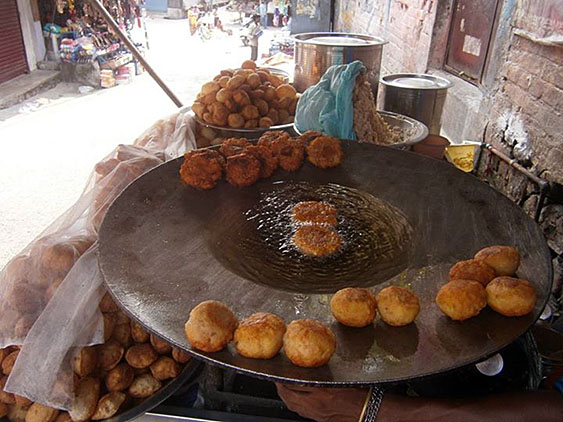
1. Breakfast - Bathura - huge fried mekici (fried batters) with potato curry

Breakfast: Bathura – huge fried mekici (fried batters) with potato curry

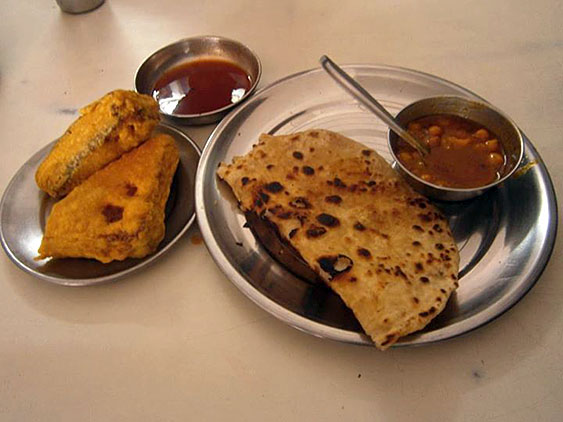
2. Breakfast - Paratha - fried bread, Chana - chickpeas curry, Fried slices of bread with sweet sauce

Breakfast: Paratha – fried bread, Chana – chickpeas curry, Fried slices of bread with sweet sauce

3. Breakfast, Paratha - fried thin bread, Dahi - yoghurt, Vegetables and pickles

Breakfast: Paratha – fried thin bread, Dahi – yoghurt, Vegetables and pickles

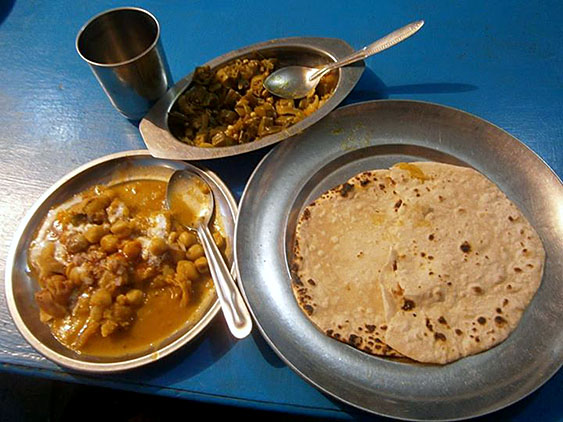
4. Lunch, Chapati - thin baked bread, Vegetable curries - chick peas and okra

Lunch: Chapatas – thin baked bread, Vegetable curries – chick peas and okra

4.1. Other kind of typical lunch, Rice, coli flower curry, red beans and lentils

Other kind of typical lunch: rice, cauliflower curry, red beans and lentils

5. Vegeterian burger with potato boll and three kind of strange sauces. We don't know for what the purpose of the spoons is

Vegetarian burger with potato ball and three kind of strange sauces. We couldn’t find out what the purpose of the spoons is 🙂

6. Fried potato balls, served with different sauces. Very delicious

Fried potato balls, served with different sauces. Very delicious.

7. Fried slices of bread with potato filing

Fried slices of bread with potato filing

8. Mixed vegetables curry with paneer (indian cheese) plus chapati

Mixed vegetables curry with paneer (Indian cheese) and chapatas

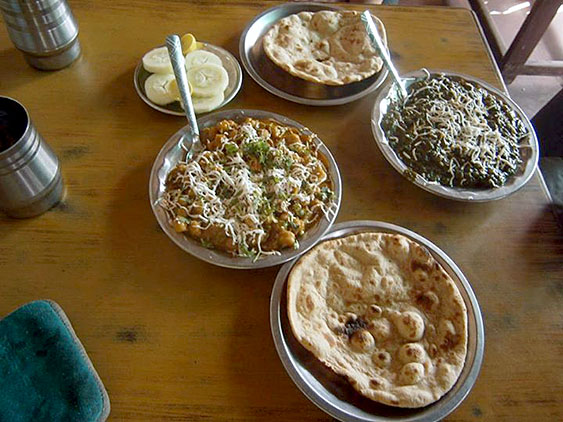
9. Dinner - Chapati, salad and vegetable curries - chick peas with masala and spinach with cheese (paneer - kind of Indian cheese)

Dinner: Chapatas, salad and vegetable curries – chick peas with masala and spinach with cheese (paneer)

10. Lassi - sweat yoghurt served in clay cups which are for one use only

Lassi – sweat yogurt served in clay cups which are for single use

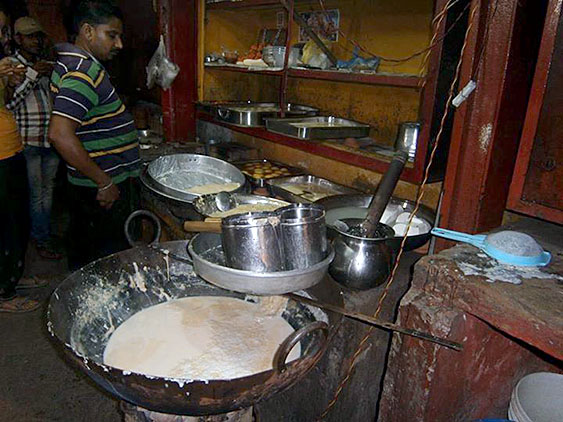
10.1 The milk shops opens only from 7 to 12 pm. For most of the Indians drinking a cup of hot milk before going to bed is a deeply rooted habit. The cup of milk is served with a spoon of cream

The milk shops opens only from 7 to 12 p.m. For most of the Indians drinking a cup of hot milk before going to bed is a deeply rooted habit. The cup of milk is served with a spoon of cream.

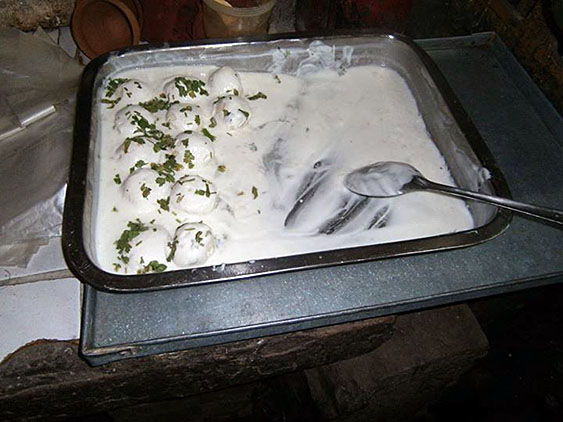
11. Rasgulla - balls of sweet cheese, it has spongy structure. Milk cream - sweetened and not sweetened

Rasgulla – balls of sweet cheese, it has spongy structure. Milk cream – sweetened and not sweetened

12. Sweet lassi - yogurt

Sweet lassi – yogurt

13. Sweet and salty cheese balls

Sweet and salty cheese balls

14. Very expensive sweetened milk cream

Sweetened milk cream – very expensive

15. Halwa

Halvah

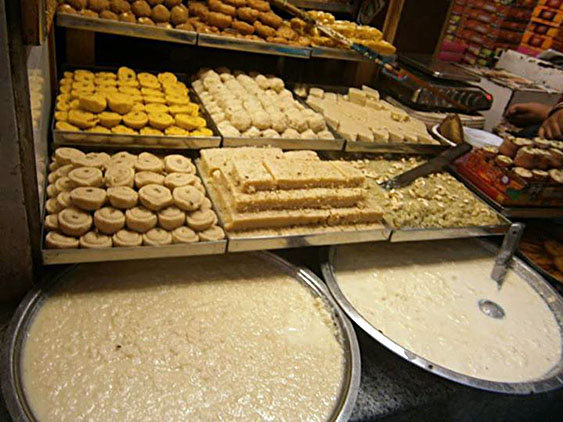
16. Milk sweets

Milk sweets

17. Sweets made of milk

More milk sweets

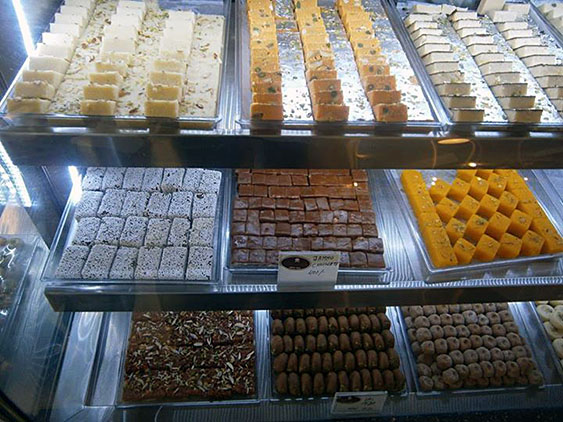
18. Sweets shop

Sweets shop

19. Traditional sweets

Traditional sweets

Impressions from Tso Moriri Lake


A place from the dreams of God: impressions from Tso Moriri Lake

OLYMPUS DIGITAL CAMERA


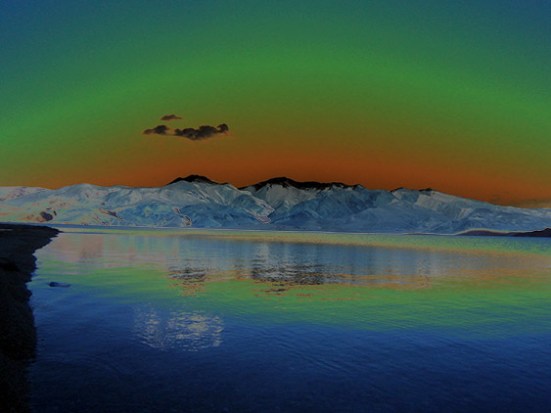
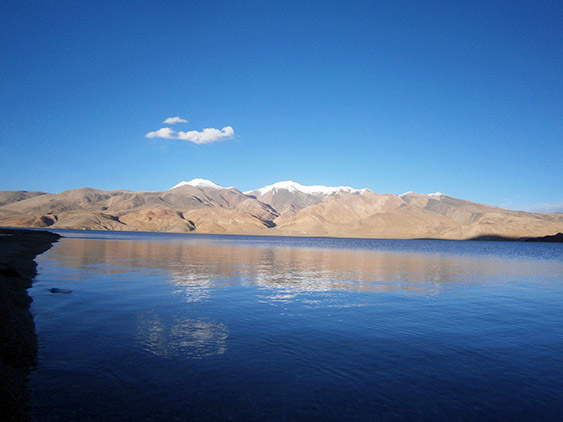
Tso Moriri

The deity is dreaming a centuries old dream. It dreams of a sparkling blue sapphire thrown in the endless waves of cliffs. It dreams of gigantic orange rocks under the violet sky. Its breath creates winds dancing above the sand, from its eyes flow milky blue rivers. Millions of stars hide the night sky. There are only two colors in its dreams – orange and blue.

Small people with silky herds of sheep are born and then die among the cliffs. A manikin, which likes to walk on every part of the dreamy creation, wanders around this forgotten place. The manikin loves the sand and steps on it, steps on the water, on the river rocks, on the thorny bushes, on the ginormous cliffs, on the ice, on the turf, on the snow.

The manikin walks in oblivion an eternity, walks as if all of its life under the snowy peaks piking through the sky and the heart of the walker. Sometimes I dream this dream for seconds, but I am not sure which of the myriad mountain pathways leads to these visions.

OLYMPUS DIGITAL CAMERA

Tso Moriri

Himalayan questions to ponder (essay)

OLYMPUS DIGITAL CAMERA

During our long wanderings around the Trans-Himalayan dessert, a reality, which is more real than any other reality, crystallized before us. Seeing other cultures that lead a millennial old way of life, the hours we spent walking under the sun and in the rain, the surreal views at 4000 m. above sea level (13 800 feet), the lack of any informational sources, little by little made us question everything. At these altitudes the mind gets clearer and the eyes see better. Life down in the plains seems absurd and filled with illusions.

How do you see these questions?

OLYMPUS DIGITAL CAMERA

In the world today nobody values bread as a food that gives life. In fact nobody even sees the connection between food and life. We wonder whether to eat burger for lunch or maybe go to a gourmet restaurant, why not try a bio, eco, natural, vegan meal from kelp and quinoa with no preservatives added or maybe pizza or pork, why not a French gourmet plateau with ten varieties of cheese. We eat rapidly while watching our monitors or read with hours the latest and most fashionable bio receipts and calculate the quantity of omega trans acids and the vitamins in a certain kind of meal. We so many kinds of foods and options that in fact nobody remembers the essence of the word “food”. Now foods just reflects our taste and way of life.

People at the harsh Himalayan valleys can only grow barley, peas and potatoes because of the atmospheric conditions. There are no stores. If there is some small local shop you can buy only biscuits.

OLYMPUS DIGITAL CAMERA

While we walk here, depending only on the provisions we carry in our rucksacks, the only thing we can think of is: “I hope there is someone who can sell us flour in the next village”. The only thing we want is flour. It is the only thing that will let us survive. At this moment we don’t even imagine any kind of meal and the biscuits at the store don’t seem appealing.

For the first time in my life when I see barley fields I think: “food”. For us, and for most locals, these small terraced fields, that sometimes are hours or days of walking from one another, mean survival.

Not so long ago people appreciated food and mostly cereals in the form of bread, as something holy. Maybe for most modern people the words “thank you for the bread you put on my table” are some funny anachronism that they never use before they start eating, but these words come from people who knew the meaning of bread. While walking the long kilometers I think: if people instead of eating and worshipping all that is “bio” they should take a bite from a bread and say to themselves how blessed they are and how blessed is the food they eat. I am sure that they will be happier and healthier than the others.

Why do you think we lost our natural connection with food?

OLYMPUS DIGITAL CAMERA

Meeting other mountaineers and tourists here made us think about other things too. Seeing how people don’t dare to recede much from the security of “civilization” without trying to take the comfort with them made us wonder. All or at least 99% of tourists here start their treks with pack animals, tent, kitchen, tent-toilet, tent-living-room, chaise-longue and all other kinds of useless things such as chairs, tons of food, special devices for purifying water, etc.

Why is it so scary to drink from the pure mountain spring or sit or lie on the ground alone into the wild? Most people wouldn’t do even this kind of “comfort” expedition. Going out of time is terrifying for most. Why would someone be terrified by the strong wind, stepping on the ground, bathing in the rivers or the summer rain? Aren’t we all nature? Won’t we all go back in the dirt and in the rivers that give us life?

The question that was nagging at me was: where does this negation and fear from uniting with Earth comes from?

The areas we walk in are so so beautiful that we often wonder if they are real or we are just walking in a dream. The odd thing is that it doesn’t seem that they affect in the same way the other tourists. Then I asked myself – does one need to be pure and to carry the magic in oneself in order to see it reflected in the outside world? What should this place be or look like in order to shatter these people?

When we don’t see miracles and beauty around us is it because they couldn’t be found inside of us? What do you think: does the outside world create the inside or vice versa?

OLYMPUS DIGITAL CAMERA

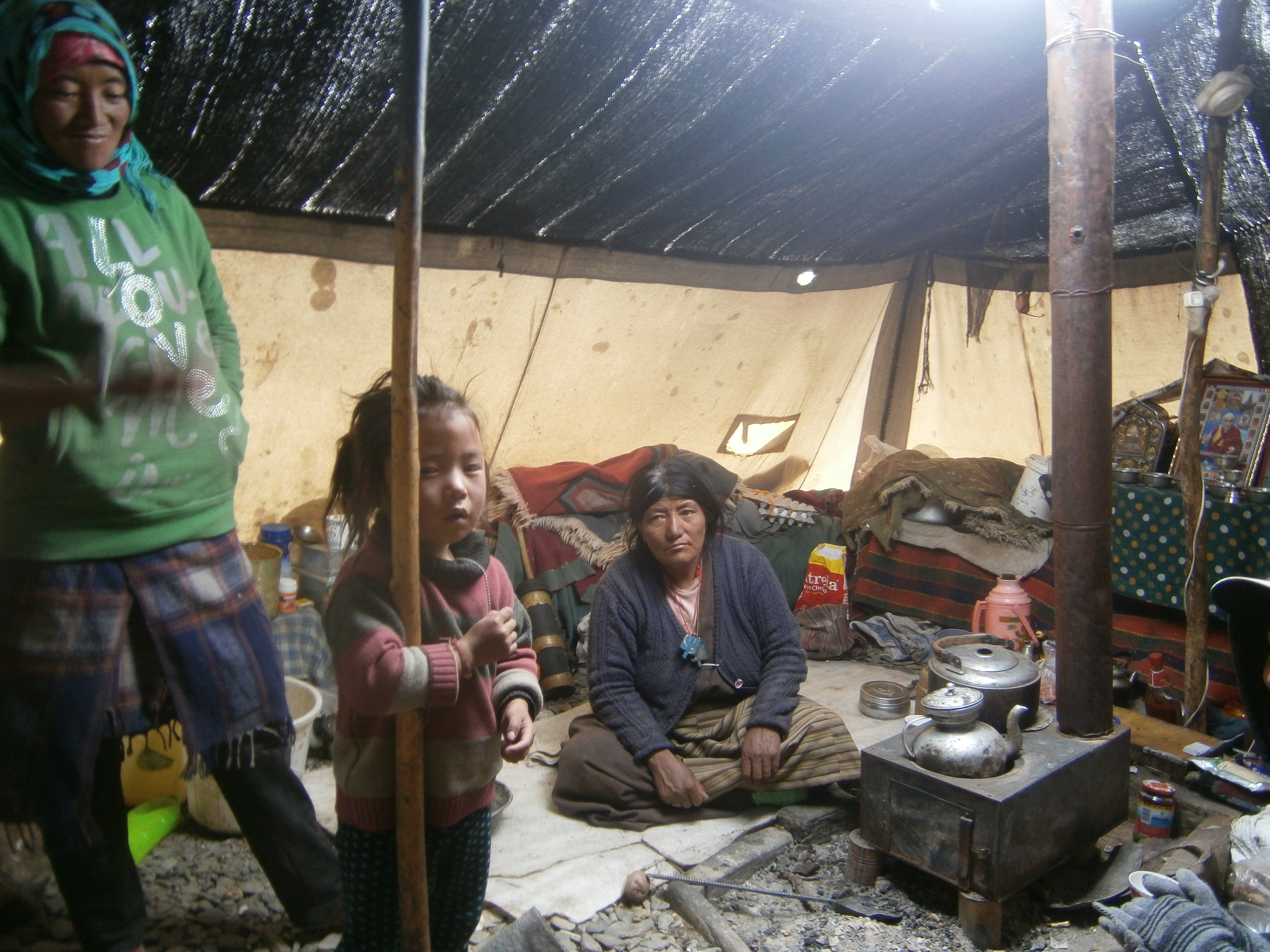
We had the opportunity to see the way of life of Changpa nomads who live ib east Ladakh, India, close to the border of Tibet. And it shocked us. Changpa nomads live at 4200 m. above sea level (13 800 feet) at the cold desert-like plateau Chang Tang. The only thing they own are the big sheep and goat herds that provide the valuable pashmina wool. Living conditions here are very harsh – according to the western point of view.

It is not possible to grow any fruits and vegetables here because of the climate. Nomads buy basic things as flour and sugar from the capital Leh which is 300 km. away or 8-9 hour driving with a car. The only fruits and vegetables they eat here are potatoes and turnip. Traditionally nomads eat dairy products, meat and barley flour products. Fruits are almost unknown to them.

OLYMPUS DIGITAL CAMERA

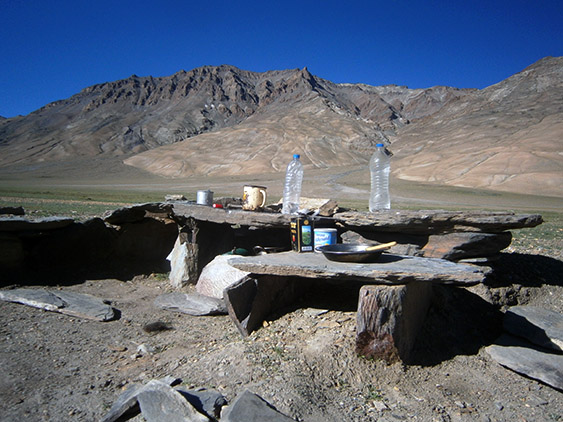
In the summer they climb at grazing pastures which are located at 5000 m. above sea level (16 400 feet) where temperatures at nigh fall below zero (32 Fahrenheit). In the winter they descend at 4200 m. (13 800 feet) with temperatures below minus thirty (minus twenty two Fahrenheit). They live at nomad tents or in stone shelters (these are piles of stones that protect you from the wind – they are not even houses). The only thing they use to make a fire and heat themselves are dry yak excrements and roots of thorny bushes that grow here. The remoteness of the region makes access to schools, hospitals and the likes almost impossible.

Changpa sell the precious pashmina wool at very high prices and they are definitely not poor. Every family has enough money to take its belongings, put them in a jeep and go live in Leh or some place with summer all year long at the low parts of India. Why they don’t is a question with no answer.

I think about this and I wonder: why do we all live where we grew up? Why is it so difficult to leave our dusty, polluted office and town and we think we have no other alternatives?

What if somewhere there is the paradise, outside of our established stereotyped life…

Life in the lake (a fairy-tale)

OLYMPUS DIGITAL CAMERA

Lotus

OLYMPUS DIGITAL CAMERA

Endless lotus fields

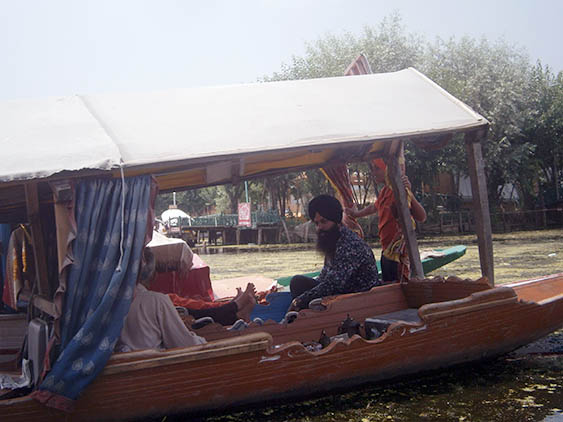
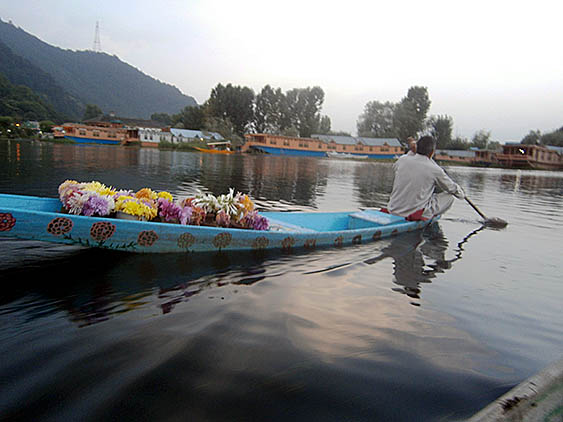
The people in Dal Lake are living in a different way than the others. What is different one might ask? It is that their whole life is floating, filled with lotuses and algae. Their houses are boats, their cars are boats, their shops are boats too. Everything here is floating and touching the water.

Let’s say you live inside Dal Lake and want to buy breakfast, a begonia plant pot, zucchini or a ball pen – all you have to do is go sit on your porch next to your stairs going down directly into the water, and wait for a peddler to pass by. If you wait for some time and nobody passes you can just jump in your own shikara (type of boat) and paddle to the closest pile shop.

OLYMPUS DIGITAL CAMERA

Floating supermarket

This type of life lets you participate in many interesting activities. For example you can get up at 5 a.m., sit in your boat, paddle to the green mosque and praise the divine, or you can wander the multitude of shadowy canals, enjoying the slob and the algae, talk to a neighbor and then sleep in the soft bed of the boat.

Most people here prefer to go out and “hunt” tourists. Which means local people get out on the street next to the lake and try to allure some tourists to take a walk with their shikara or to sleep at their boat-hotel.

OLYMPUS DIGITAL CAMERA

Boat with tourists

People who enjoy working spend their time taking care of their floating vegetable gardens, gathering lotus roots and leaves (lotus roots are recognized as the most delicious food among the lake inhabitants) or washing their clothes in the water in front of their homes.

In this town that floats above water there are many different occupations. Highly respected for example is the digger who sits in his floating excavator, digs algae and makes pathways in the jungle of lotuses and duckweed. There are other, not so honored jobs, like the garbage man who goes around with his water truck and gathers algae and plastics, and the policeman who checks the documents and the permits of the tourist boats. Luckily the police precinct is high above the lake and is surrounded by thick lotus circle far away deep inside the lake.

OLYMPUS DIGITAL CAMERA

Floating excavator

In the lake town there is even a librarian who carefully gathers book after book through the years and puts them on shelves. Unfortunately he can’t read and the content of his most precious treasure always remains hidden for him.

There are also people who like to observe – like fishermen and board game players. Often you can see someone who gazes at the far away mountains dreamily, smoking narghile. Children like anywhere in the world are occupied with the most pleasant of activities: endless swimming in the water and jumping in the lake from wooden bridges.

OLYMPUS DIGITAL CAMERA

Smoking narghile in the shadow

Maybe you’ve noticed that all of the time I use the words “algae and lotus”. I do it because in my long boat trips on the lake’s water these two plants always got tangled in my paddle and since then are en-tangled in my mind. It is long since I had been there, but the secret I learned in the lake still works wonders for me.

What is that secret which was revealed to me by the lake’s inhabitants I couldn’t tell you. But if you come here someday and start paddling around maybe you will discover it by yourself.

Author: MagicKervan

OLYMPUS DIGITAL CAMERA

The garbage boat

OLYMPUS DIGITAL CAMERA

Flower shop

OLYMPUS DIGITAL CAMERA

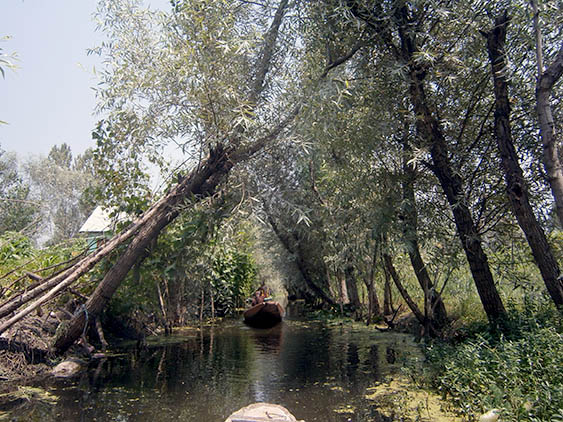
In the canal labyrinth

OLYMPUS DIGITAL CAMERA

Police precinct

OLYMPUS DIGITAL CAMERA

Mosque

OLYMPUS DIGITAL CAMERA

House in the lake  

Polyandry – why not? (a documentary note)


OLYMPUS DIGITAL CAMERA

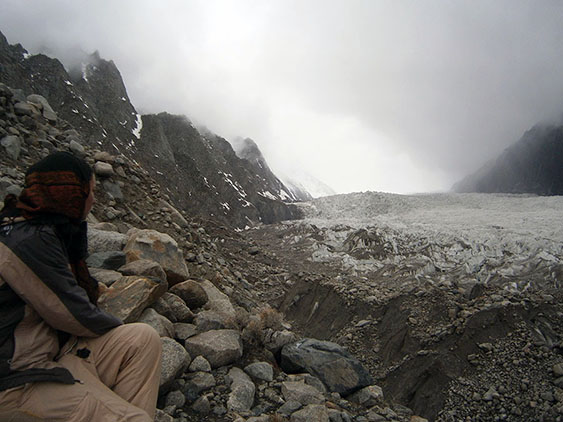
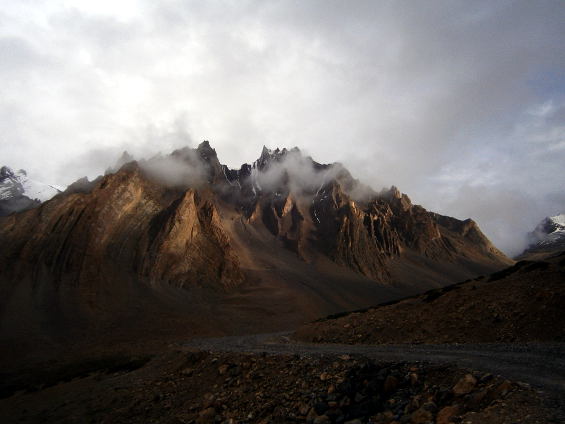
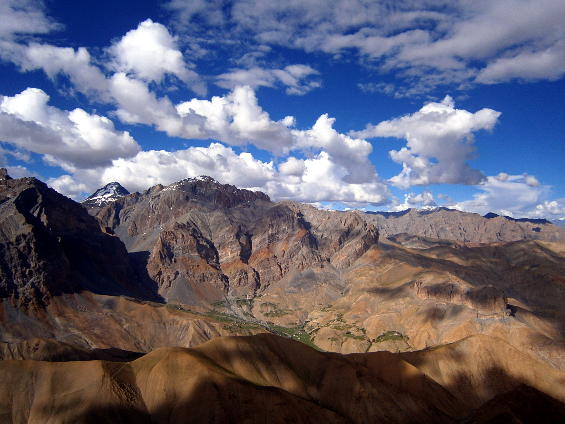
Mountains in Ladakh

Indian Himalayas, Ladakh region

Here we encounter a phenomenon which is not very popular and for most of the people is even a taboo. Have you heard of the term polyandry (dictionary def.:polygamy in which a woman has more than one husband)? Can you imagine how you share your wife with two-three more husbands, or if you are a child, you are not sure who of your three daddies is your genetic father and being a father you happily bless your daughter on her triple wedding as well as your new three sons-of-law?

OLYMPUS DIGITAL CAMERA

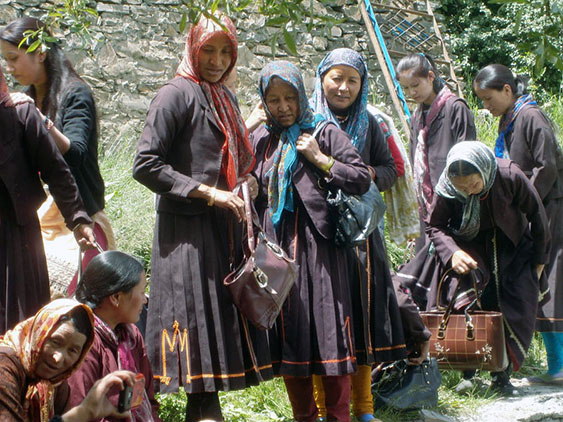
Local women

Similar family order we find in the most northern mountain regions located close to the border with Tiber. For most people the polygamy, that is widely spread in the Islamic world, is not something new. We all have heard of the sultan’s harem or of rich people who have several wives, but here the situation is quite different – one woman has several husbands.

The main reason for this odd family order is the lack of land. The mountain desert region where Ladakhi  people live, offers very limited space of agricultural land which is the main part of one’s property and the legacy of the parents for their children. At the traditional Ladakhi family, if there is more than one son, the land is not being divided among the offspring. All the property is inherited by the oldest brother. The other brothers are allowed to live under his roof and share literally everything: the food… and his wife.

OLYMPUS DIGITAL CAMERA

Woman from Gongma Village

The children of the common bride are considered children of the oldest brother and respectively he takes all the necessary care for them. Anyway there is not valid method to identify whose the child is. If a family has more than three sons the youngest are sent away to seek their own fortune and do not inherit anything. This is normal considering that here, in these remote areas where one wouldn’t even dare to take a walk, if there is a flat land and water for irrigation, it is immediately taken by someone who procreates right away.

Another interesting case is what happens in the families that have only daughters. In this case the oldest daughter inherits all and becomes the owner of the property. She can marry as many men as she wants and usually the candidates are the younger sons of other families who don’t own anything. This husband plays the role of a servant and doesn’t receive anything from his wife’s property and belongings and can be sent away at any moment. Such type of husbands are called “magpa”.

OLYMPUS DIGITAL CAMERA

Women in Ladakh’s society enjoy full rights, has her own finances and can always start own business or divorce whenever she likes. As a result sons and daughters are equally welcomed by the families here, in opposition to other traditional societies like the Chinese for example.

Because of the hard conditions here children are considered a real treasure and nobody leaves their babies. Here even if you are а single mother you can find a husband easily. This is unthinkable for the other traditional societies where the virginity of the bride is a must as well as the genetic relation with your children. Around here even if the child is not your own you love him/her with all your heart.
The climate and the geographic location of Ladakh region (seven-eight months of winter with temperatures minus 30 degrees Celsius (minus 22 Fahrenheit), the inability to grow fruit trees and most of the vegetables, limited agricultural land and other factors) turn raising children into an uneasy task and usually families here have maximum three-four children.

OLYMPUS DIGITAL CAMERA

Glaciers

By irony today in Ladakh two traditional societies collide– the Ladakhi who practice polyandry and the Kashmiri Muslims who practice polygamy. A muslim would never share his wife with another men and the Ladakhi woman would never allow other women close to her “magpa”. Because of this nowadays everywhere in the world we have the monogamist society : )

This is a joke of course, mixed marriages between Muslims and Buddhists are pretty rare here. But the ongoing modernization of the society makes polyandry less and less popular among young people, though here one can still find this kind of families in the more remote areas and among the older generation. Besides this the law in India allows only monogamist marriages.

Polyandry is a phenomenon that ensured the survival of the generations in this raw region which we could understand in profundity only if we have travelled on the Trans-Himalayan desert with remotely located small oases of life. Phenomenon that is going extinct, but still exists nowadays and amazes the travelers who come to this remote lands.

Sources: talks with local people, the book “Magic Ladakh”, author Louis Gompertz

Author: MagicKervan