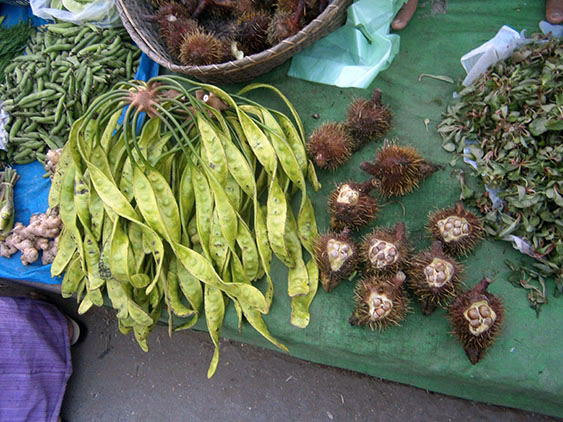
Huge bean Continue reading
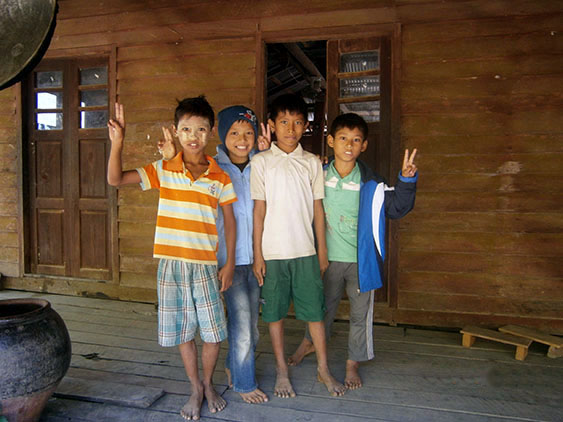
Children of Myanmar
06.12
 We climb down the mountain on a narrow pathway and reach the main road. We have prepared mentally that we will walk 5-6 km, but after twenty minutes a businessman takes us to the nearby town Kyaukpadaung. Then we start to wait. And wait. After an hour a luxury car stops and takes us to the place we want to go – namely Magway. Traveling is pleasant accompanied with the usual views of palms and bamboo houses. We pass 150 km. without even noticing. Continue reading
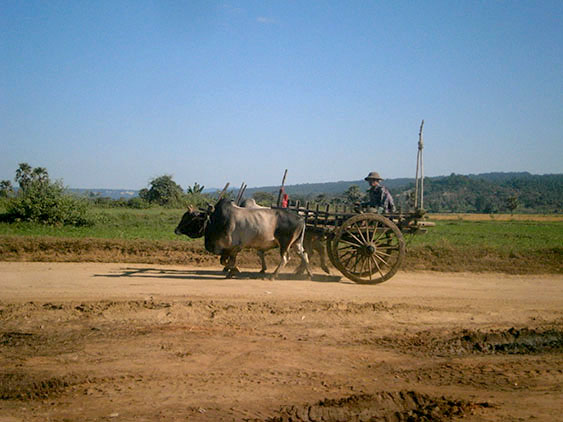
Burmese with a cart
25.11
We enter Burma – now officially Myanmar: a country we don’t know almost anything about. What we know is that it is a Buddhist country and after many years of military dictatorship and a few days ago the elections were won by a democratic leader: Aung San Suu Kyi who had spent many years as a political prisoner and won Nobel Peace Prize. All the travelers we met who had been there were very impressed by the country and said it’s very special and the people are extremely hospitable and nice. This is all the information we have for now. Continue reading
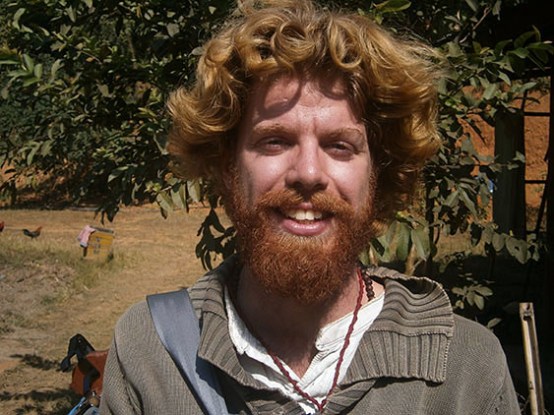
Joan Pol Mingot
Intro
During our traveling we often meet many tourists and not so often extraordinary travelers. Some of them travel hitchhiking, others on a bike, one time we met an American who was traveling always on foot – thousands of kilometers, mind you. Their journeys are several months to tens of years long. They come from different countries, look in a different way, some are very well equipped, others are skinny because they don’t eat so well and so often, but we always see something that is common for all – they emanate pure joy and have clear and sparkling look in their eyes. Every time we meet such a person we are overjoyed and the conversations we have with them are very interesting, the stories we hear are truly inspiring and many times they give us ideas, which prompt us to embark on even crazier journeys than the ones have taken up to now. These meetings stimulated us to publish some of these travelers’ stories in order to try to convey the feeling of meeting such a person.
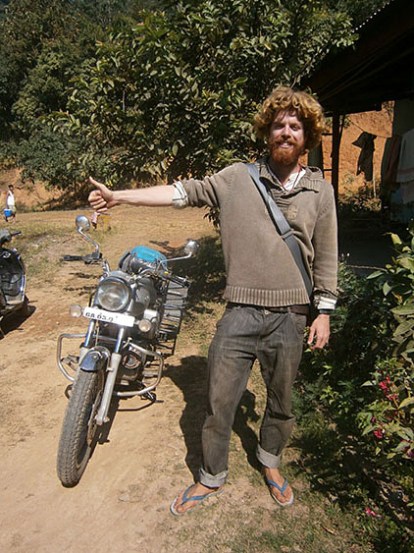
We are extremely happy to present to you our first guest from Cataluña whose name is Joan and who travels from Thailand to Europe without even a single penny!
How we met
Our six-month journey in India was about to end. Our last stay was at Imphal, Manipur in northeast India. Right after we met with our couchsurfing.org host we came across his other guest called Joan who had come a few days ago from Myanmar. We started immediately exchanging ideas and information about our forthcoming journey in Myanmar and respectively his in India. One of our first questions was whether he had any problem exchanging dollars for the local currency. We were flabbergasted by his answer which was that he didn’t know because he traveled without money. We though we misunderstood something, but later on it became crystal clear to us that he traveled without any money except a small sum he kept for the visas. Here comes his story:
The story
Name: Joan Pol Mingot; Nationality: Spain; Age 24 y.; student physics (quantum mechanics)
The interview:
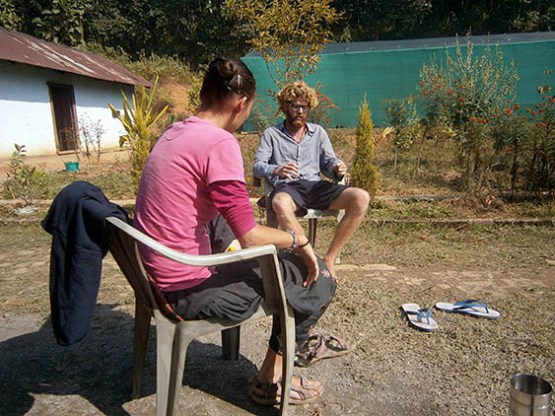
Tell us about your current trip.
August 2014: I travelled to Indonesia, Semerang (central Java) to join a long term voluntary project where I had to teach English in UDINUS – a local University. One year project. Within this year due to my loose schedule I had the chance to get to know deeper the city, Java island and its surroundings.
August 2015: My project is over but I am still not ready to go home. A friend came to visit me and we traveled around Thailand, Laos, Cambodia and Vietnam. I had money. We traveled low budget, Couchsurfing, hitchhiking (eventually, not regularly).
September 2015: I am going home overland. No money anymore (only for visas). Hitchhiking full time. Sleeping in Couchsurfing, monasteries, tent, random peoples’ homes. Around June 2016 I might be home… I might be not!
Why/How did you choose to travel this way?
Not having money! Ha ha ha! Not having money was not going to stop me from traveling, why should it? Once in it, once I overcame my fears and hesitations, it’s the best experience I have ever had. Feeling vulnerable and uncertain all the time makes you aware. It’s like forcing you to a certain state of mindfulness. I never know what I’m going to eat or even if I’m going to eat, never know where or if I’m going to sleep, where I might be able to arrive by the ride. It’s funny, because when you get rid of any expectation you feel so free. I’m happy I didn’t have money, I wouldn’t change it now.
Tell us an inspiring story from your journey
After crossing the border from Thailand to Myanmar I started hitchhiking and after 5 min. I got a ride. It was 4 p.m. A family going to Hpa-An (5 hours away). I was so happy. After 3 hours the old guy on the back and the little girl got off of the car and paid the driver. It was a damn hidden taxi! What looked like a family were random people going from one place to another. When we arrived to Hpa-An I still had some dollars remaining from the visa, so since I had the money, I didn’t like arguing. I ended up paying.
It was around 9 p.m., dark and I was looking for a place to pitch the tent. I was angry. All of a sudden a guy came and offered me to stay in his place. I said I have no money. He didn’t care. We went to his place together and the first thing he gave me was a traditional T-shirt from Myanmar. I hadn’t eat since breakfast. He asked me if I was hungry so he took me out for dinner. The next day he first treated me to breakfast and then asked where you wanna go? I said to Kyayktyo but I will hitchhike. He didn’t understand. Finally he paid for the bus to there and gave me some money to eat that day. Later on, after several days, I was told that hosting foreigners in Myanmar is illegal…
A place that impressed you
Thabarwa Centre in Yangon, Myanmar. I cannot explain it briefly. Google it.
Personal philosophy
I just want to make the world a better place and as is said: “be the change you want to see in the world”. Now I am on my way to grow up personally and spiritually. Learning how I can be the best person, how I can get wiser every day, how can I make the change possible in me so I could be able to spread it to the world.
Dream or goal
My goal is the same. Make the world a better place. Day to day job, every day counts. I mean it’s not this unattainable goal, every day I accomplish it, but it’s not enough, so the next day a little more.
End of interview
We want to shed some light on a very interesting phenomenon that we witnessed many times and as it turns out Joan also noticed it.
It happens quite often during our travels that someone (a person on the road or a passer-by) asks us where we are going to and whether he/she could help us with something. When we say we travel hitchhiking she/he says that in this country no one will take us and hitchhiking is impossible. The irony is that he himself had stopped to help us. It is a fact also that every day we meet dozens of people who help us and take us in their vehicles.
The question that arises here is: aren’t we all surrounded by mainly good people? Do we consider that our neighbor who sympathizes to the other political party and who we hate for years; the person who cuts our way on the road in the morning; the “friend” who gossips behind our back and so on – are (and we too) all good people? And maybe the programming we are subdued to since birth, and the roles we have to play in the society, are what makes us hurt the people around us and sometimes even ourselves….
Author: MagicKervan

Golden Temple, Amritsar, India
Almost everyone I know have had (or still have) a dream to see India. Why exactly India – a country that is overpopulated, hot, very dirty at places, noisy, full of beggars? Maybe they subconsciously intuit that visiting it could be life changing and it is a country full of miracles, which we secretly hope do exist.
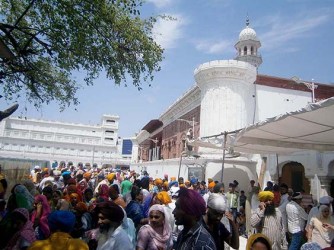
This land holds the seven rings of hell, the earth mundane world, the purgatory and the seven rings of heaven in one time-space continuum. Being there stimulates the sense to the extreme. All opposites meet in India.
Way of life that goes unchanged for thousands of years, ancient beliefs, ascetics and spiritual people, transcendental teachings and yoga masters co-exist together with extremely rich people, malls, consumer oriented people and debauchery. Vegetarians who eat just leaves and no cooked food are together with meat eaters, gluttons and fat rich people.
Beggars, people with no limbs, lepers and horrors that the European can’t even imagine, together with rich land lords, temples that receive donations in the form of golden utensils, luxury restaurants and unimaginable wealth.
Hindus, Muslims, Christians, Buddhists, Sikhs, Jains, Jews and atheists live peacefully in the same city and sometimes even under the same roof.

The way of living of people having all kinds of beliefs and religions, characters and social status co-exist at the same place together with garbage piles, rats, pigs, cows, dead bodies floating in the river together with nice streets, beautiful parks and luxury neighborhoods.
Loud noise and thick dust change with Himalayan purity and silence. Impossible crowds and then thousands of kilometers of uninhabited deserts and mountains. Sands and jungles, islands, oceans, huge rivers, high mountains, snow, heat, droughts, floods – here in mere hours you can be at a totally different place. The diversity is indescribable. India can’t be described – it has to be experienced.
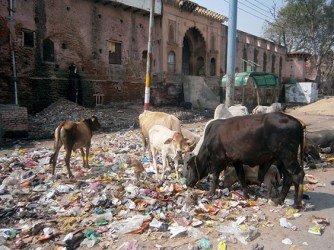
Real miracles and irrationality are in their apogee here. You will either run away terrified or you will fall in love for life. There is no place for criticism – this is India with all its magic.
I can describe the overall feelings we had as appeased and joyful. Even in the most craziest of places, being on the verge of asphyxiation, nervous breakdown or becoming deaf we were still laughing and feeling carefree.
India changes people and their stereotypes. I don’t remember even a day when I was feeling unhappy of being here. Six months passed in a blink of an eye, everything here is very interesting and we couldn’t see even one third of the country.

I am in love with India. I feel as if it is a place where we have lived for a long time. The road will probably take us there again.
November 30
Mandalay, Burma

Ima Market (Mothers’ Market), Imphal
16.11
 In the morning we have the chance to meet our benefactor and his whole family. It turns out he is the uncle of the men whose door we knocked on yesterday. The surrounding other 3-4 houses, with the belonging land which is quite vast, also belong to their family – they are in fact rich Brahmans. Our guy is the eldest of all and this is the reason why they take us to him so he can decide how to proceed. He looks young and has lived 20 years in Canada where his wife and sons still are. Continue reading

Living root bridge
Meghalaya, which in Sanskrit means “the abode of clouds” (even the name gives allusions to some long gone continent or even another planet) is located in the most northern parts of India and is geographically and culturally separated from the other parts of India. It is like a surreal reality that exists only in the imagination of someone like Marquez. Entering this Indian state you find yourself in as if another country where there is nothing Indian. Here are some signs by which you can conclude you are in a parallel space-time continuum far from the normal mundane reality.
November in Meghalaya. At 4:30 p.m it is already dark. In the dusk one can see people wrapped in blankets with bright red lips and teeth, colored by the betel they chew all the time, walking vigorously in the cold humid weather. The somewhat flat faces, their eyes and the dark skin tells you that you are in the land of some unknown tribes. The strange quietness and desolation of the villages combined with the low temperatures (though you are in the tropics) slowly start influencing your senses dragging you in an uncharted territory. You wake up and contrary to all the biological laws you are in a pine forest with banana trees here and there.
While you walk in the streets you try to define the level of modernization and development of the local society, but you can’t. You see women wrapped in blankets walking next to girls dressed provocatively and with very modern hairstyle. Middle aged women with a light semi-transparent piece of cloth around their waist (think Roman style) wear glossy stilettos as if designed in the 40-s.

Church of Don Bosco
Then you suddenly find yourself in a tropical jungle where bare footed indigenous people gather skillfully roots and herbs and then surprisingly you see in front of you a church (Presbyterian – mind you!) with a statue of Don Bosco outside. And next to it is the school “Sacred Heart” where you see pupils with short blue skirts or short pants with white socks above the knee.
At breakfast you go to a wooden shelter where there are a dozen of merchants who sell giant pieces of beef. Inside, still sleepy, with a chequered blanket worn as skirt, disheveled hair and bright red lipstick, is the owner who serves you the only vegetarian food they offer, which has pretty bad taste. But you know you will come back (because there aren’t much restaurants here).
Mower in the field and a dirty worker start talking to you with the perfect English accent. The fact that you have pitched your tent in the center of the town obviously doesn’t bother anyone and people behave as if nobody even sees it.

A house in the jungle
To summarize: you have just walked 10 km. and all your senses are blocked by the contradictory signals they receive – the pine forest with banana trees, the biting cold combined with the tropical jungle a few feet away, the people who look like coming from some tribe, but are actually well educated Presbyterian Christians. On top of all this the most emancipated women are those who actually rule this strange Matriarch society.
After you have encountered all these improbable things from the Meghalaya reality you are flabbergasted and perplexed and the only conclusion that could be done is: “I am in some surreal book”.

Living root bridge
06.11
 We arrive at 4:20 a.m. at Guwahati’s railway station. The sun hasn’t risen yet and the weather is cool. We leave behind us the broken roads of West Bengal, the egg and beet rolls and the men wearing blue striped skirts. Assam State welcomes us with humid tea plantations and people with Asian features. Sadly we won’t have time to see much because traveling next to the border promises to be slow and extreme and our visas will expire soon.
Assam is famous for its black tea, which is exported all over the world and with its extremist groups, communists and strange tribes. The situation in the north states is pretty insecure, but Guwahati is safe. Continue reading

Victoria Memorial
23.10
 We head to Bodhgaya, Bihar State hitchhiking. This again is a place of great importance to Buddhist community. The distance we have to pass is 200 km. and we are not sure we will be able to reach the city today. I really want us to succeed because today is my birthday and I want it to be filled with the energy of the place as the whole year ahead.
We cross all the ghats on foot and we reach a bridge over Ganga. We catch a shared rickshaw to Mughal Sarai – a small town close to which the highway to Kolkata passes by. From there we decide to catch another one because walking in the dust and the noise is not pleasant. Continue reading

Varanasi
16.10
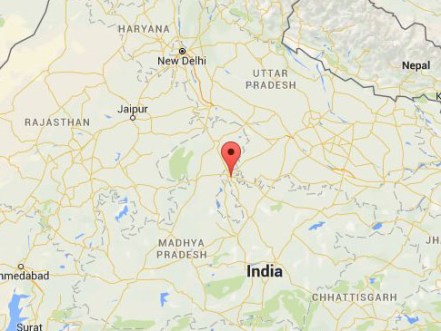 In the morning we take a tuk-tuk for 15 euro cents per person to Orachha. The architecture of the town is amazing. There is an ancient fort with huge palaces for maharajahs dating back to 16-17-th century. Orachha used to be the capital of a local dynasty and the maharajahs used to live here. The ticket for entering the fort is 4 euro and doesn’t fit our tight budget so we take a path that goes around the palaces. Continue reading
 Magic Kervan