
Living root bridge
06.11
 We arrive at 4:20 a.m. at Guwahati’s railway station. The sun hasn’t risen yet and the weather is cool. We leave behind us the broken roads of West Bengal, the egg and beet rolls and the men wearing blue striped skirts. Assam State welcomes us with humid tea plantations and people with Asian features. Sadly we won’t have time to see much because traveling next to the border promises to be slow and extreme and our visas will expire soon.
Assam is famous for its black tea, which is exported all over the world and with its extremist groups, communists and strange tribes. The situation in the north states is pretty insecure, but Guwahati is safe. Continue reading

 We head to Bodhgaya, Bihar State hitchhiking. This again is a place of great importance to Buddhist community. The distance we have to pass is 200 km. and we are not sure we will be able to reach the city today. I really want us to succeed because today is my birthday and I want it to be filled with the energy of the place as the whole year ahead.
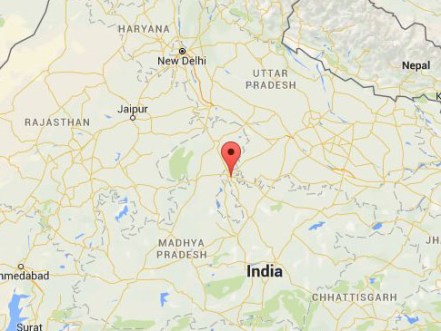 In the morning we take a tuk-tuk for 15 euro cents per person to Orachha. The architecture of the town is amazing. There is an ancient fort with huge palaces for maharajahs dating back to 16-17-th century. Orachha used to be the capital of a local dynasty and the maharajahs used to live here. The ticket for entering the fort is 4 euro and doesn’t fit our tight budget so we take a path that goes around the palaces.
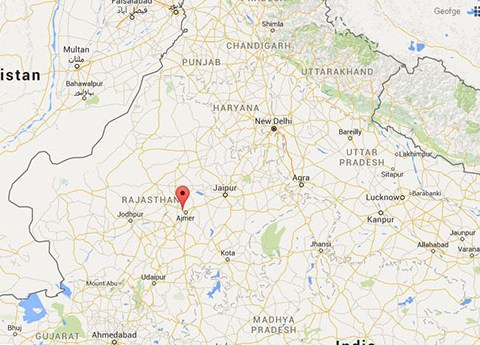 Pushkar is a small town in the semi-deserted central region of Rajasthan. The soil is sandy and there is not much vegetation. Small streets and buildings with ancient architecture surround Brahma Lake. Taking pictures, eating meat and walking with shoes around the sacred lake is strictly forbidden. There are artificial pools with ghats (stairs leading to the water). Dipping in the water is believed to be a blessing – to some it gives beauty, to others fertility and to some healing.
  Magic Kervan